What to Expect During an Endoscopy: A Complete Guide for International Patients
An upper endoscopy (or gastroscopy) is one of the most effective diagnostic procedures for evaluating conditions affecting the esophagus, stomach, and small intestine. For international patients traveling to India, understanding the steps before, during, and after the procedure helps ensure safety and accurate results.
Based on official clinical protocol instructions from premier hospital endoscopy units, here is a step-by-step guide on how to prepare, what happens during the procedure, and how to care for yourself during recovery.
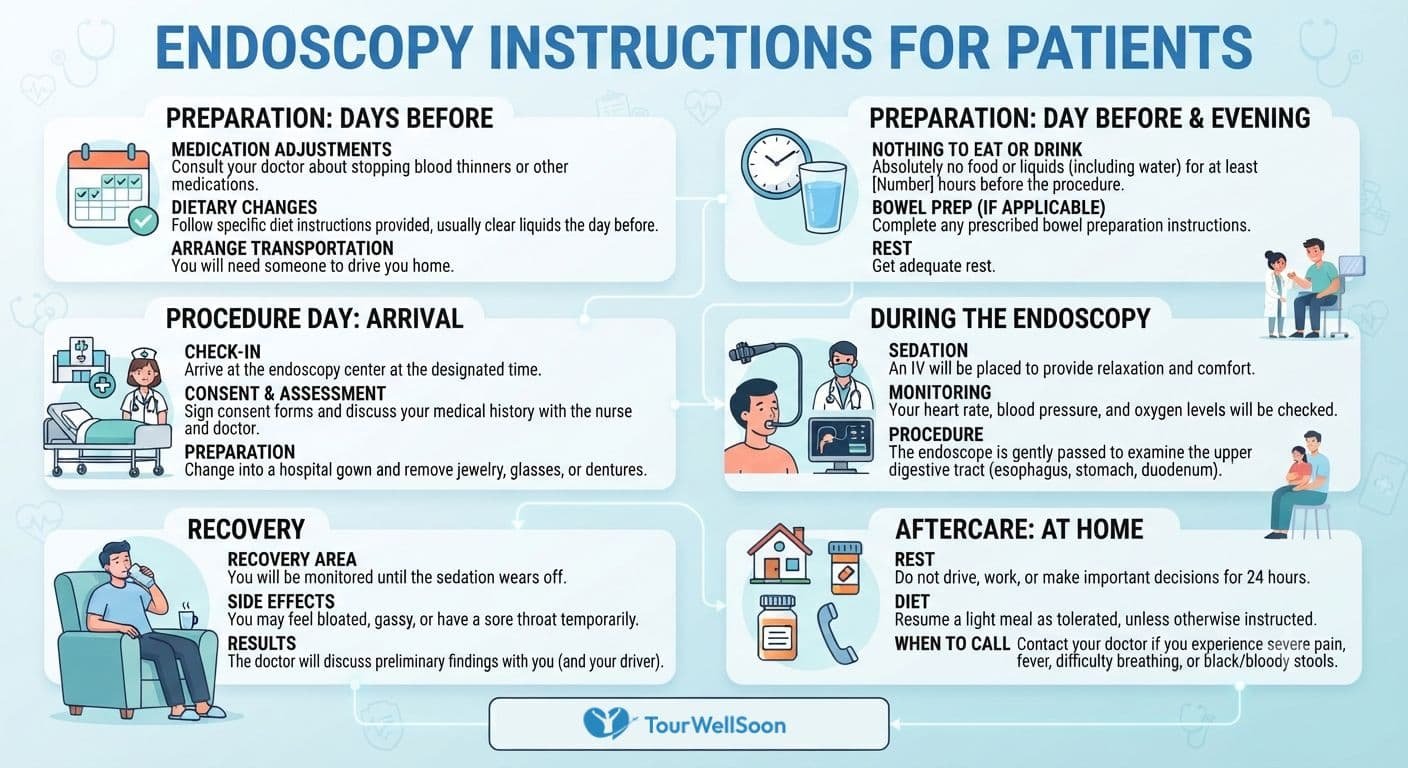
1. Pre-Procedural Preparation: Essential Rules
Preparing for an endoscopy starts well before you walk into the hospital. Following these pre-procedural guidelines is critical for your safety and the success of the examination:
- Inform Your Doctor About Blood Thinners: You must inform the medical team beforehand if you are taking any blood thinner medications.
- Strict Fasting: You must take nothing by mouth (no food or liquids) starting from midnight, or for a minimum of 8 to 12 hours before the procedure.
- Bring a Companion: Patients must be accompanied by a relative or attendant.
- Arrange Post-Procedure Transportation: You are strictly not allowed to drive for at least 12 hours after the procedure due to drowsiness and delayed reflexes caused by IV sedation. Ensure you have arranged a driver or private transportation back to your hotel or residence.
2. Step-by-Step: What Happens During the Procedure?
The clinical team follows a standardized, patient-first process to keep you safe and comfortable throughout:
- Informed Consent: The medical team explains the procedure and any associated risks to you and your relative. Consent forms are completed with full details, including your relative’s name, relationship, address, and phone number.
- Vitals & Blood Sugar Check: Vital signs are recorded, and a Random Blood Sugar (RBS) test is conducted for diabetic patients.
- IV Line & Oxygen: An intravenous line (IV) is set up, and supplemental oxygen is provided.
- Positioning & Sedation: You will be comfortably positioned on your left side. Conscious sedation is then administered as prescribed by the doctor to keep you relaxed and pain-free.
- Tissue Sampling (If Required): If necessary, the gastroenterologist will take a small tissue biopsy or remove polyps during the examination, which will be sent directly to the lab for pathology analysis.
3. Post-Procedural Recovery & Observations
Once the endoscopy is complete, you will be transferred to a dedicated recovery room:
- Observation Period: Your vitals will be monitored continuously, and you will remain under observation for about one hour.
- Immediate Fasting: Take nothing orally (nil by mouth) for the first 1 hour immediately following the procedure.
- Starting Diet Post-1 Hour: If you have no symptoms of nausea, severe drowsiness, or vomiting after the first hour, you may begin taking oral liquids or a soft diet.
- Normal Diet: You can typically resume a normal, light diet after 2 hours.
4. Post-Procedure Care at Your Hotel or Residence
To ensure a smooth recovery after returning to your accommodation:
- Rest Requirement: Plan to rest for the next 16 to 24 hours.
- No Machinery or Driving: Avoid operating any machinery or driving a vehicle for 12 to 16 hours post-procedure. It is strongly recommended to have someone stay with you at home to assist you during this recovery window.
- Dietary Management: Eat lightly for the first 24 hours unless instructed otherwise by your physician.
- Medication Protocol: Resume your regular medications unless advised otherwise by your doctor. Begin taking any new medications prescribed as a result of the procedure.
- Aspirin Warning: If a biopsy was taken or a polyp was removed, do not take aspirin or aspirin-containing products for two weeks. If you are unsure whether a medicine contains aspirin, check with your pharmacist.
- Normal Side Effects: Mild abdominal discomfort and a mild sore throat are normal after a gastroscopy.
Medical Disclaimer: The information on this blog is for general informational and educational purposes only and does not constitute professional medical advice, diagnosis, or treatment. Always consult with a qualified doctor or healthcare professional regarding your health concerns or before undergoing any medical procedure.
At TourWellSoon, we simplify your entire healthcare journey—from medical opinions and visa support to hospital bookings and on-ground care. Contact our international patient care team today:
📧 Email: help@tourwellsoon.com
📞 Helpline & WhatsApp: +91-88105 22512
🌐 Website: tourwellsoon.com